Kowalski’s Grocery Store and Fiji Water

My grocery store is often Kowalski’s. I shop there because they carry Peace Coffee which is always Fair Trade coffee – meaning workers receive a living wage. They also carry local produce that isn’t shipped great distances and supports local farmers.

But tonight while shopping there I was near the deli and noticed a big display of Fiji Water above the Olive Bar display. Really ???? Fiji Water??? Yikes! Do we really need to ship water from the other side of the world??

I took time to convey my shock and dismay to the manager. I explained why I shop at Kowalski’s in the first place (fair trade, local, organic) and why products like this bottled water make me want to RUN and SHOP SOMEWHERE ELSE.

You can do the same. You can make a difference. Take time to talk to the produce manager or store manager. They know, as I do, that just one person making a comment means at least twenty other customers thought the same but didn’t take the time to tell them. If two or more people have negative comments on a product that product is HISTORY! You can make a difference.

Bottled water is bad enough. It gives the impression that it’s OK to pay a high price for water – something every human person needs by virtue of being human. Just like we need clean air, we need clean water to survive.

Although there are rare times when bottled water may be necessary — there is never a time when it is necessary to import bottled water from the other side of the globe! What a waste of oil, plastic (more oil) and money!

Further, too many people living in Fiji do NOT have access to clean water. The American owners of Fiji water have taken over local water sources there (as if you can own the water supply of others’?) and now export what water they have out of the country. Read more here.

(Update 3-3-11 – Learn more about the problems of bottled water in general.

Watch the “Story of Bottled Water.”)

What’s next – making us pay for breathing clean air?

You may also like Life of Water; Water of Life.
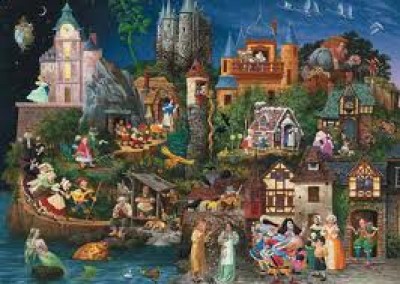
What Is Your Story?

Photo PuzzleHouse.com

Each of us has a story that we tell ourselves and others about our lives. Our story may include the roles we have played in relationships such as a spouse, child, sibling, parent, grandparent or step-parent for example. The part we play in our story may be determined by our occupation or education. Often the story includes events we encountered and how we overcame them or failed to. Take time to think about your story.

Recently I learned that my life story, as told by my family of origin, is completely different from the story that I (and others) know about my life. Since I never knew about the story being told, it didn’t affect my own life choices. However, I’m sure the story I told myself sometimes limited the choices I saw in my life – as all stories will.

The Judeo-Christian tradition offers a number of healing archetypal life stories. Many identify with the story of Exodus in the Hebrew Scriptures. It is a story of leaving a life of enslavement to the dominant culture (Egypt) and escaping to a new life. Others may resonate with the story of Jesus. Jesus was falsely accused, scapegoated, tortured and killed – but he was resurrected as a new creation, no longer constrained by who he used to be. In both stories, the world is an enchanted place. God can do for us what we can not imagine for ourselves. In my own life, I truly feel that God “resurrected” me into a new life.

You are not your story. I am not my story. We can change our story to change our future. We can create a new story. We can choose no story at all.

Do you have a story? Consider its components. Are you the victim or the hero in your story? Does this expand or limit the possibilities you see for yourself? Ask yourself this question, “If this was not my story, how would my life be different going forward?” Or consider this, “What would be my ideal story?” Using magazine pictures create a collage using key elements of your new life story. Or find a picture or object that represents your ideal story. Place it where you can see it easily. Now live as if that story was already true!

You may also like Happiness is a Choice and Tiny Silver Spoons.

Violent Language, Violent Thinking, Violent Actions

Photo Eco Friendly Mag.com

After the shooting of Rep. Giffords in Tucson, AZ much has been written about the effects words have on our thinking and our actions. Although the shooting has not been linked to any particular phrases or wording, the discussion highlights what linguists and educators have known for awhile – words form how we think and understand the world, not the other way around.

Using violent language forms how we think and understand violence. It affects us over time. We live in a very violent culture and not surprisingly, we use violent language in our speech. Consider everyday acceptable language such as “target marketing,” “take a stab at it,” “bullet point” and “it’s killing me.”

The recent national health insurance debate was another example of language forms how we understand things. The media often referred to the debate as “health care reform” yet it had nothing to do with reforming health care. It had everything to do with reforming health insurance. It is a testament to the savy of the healthy insurance industry that they were able to reframe the language around this topic so effectively. They were able to instill fear regarding healthcare rather than focusing on the availability of health insurance for all. This took the spotlight off the exclusionary practices and high profits of the health insurance industry and instead created fear regarding healthcare.

Similarly, the use of non-gender inclusive language (using male language as normative for both men and women) removes any consideration of women’s experiences as different from men’s, from conversation. Not discussing it means not thinking about it. This is not merely an intellectual exercise. It plays out in real life to the detriment of women’s health, for example, when drugs are tested only on men (again considered as the “norm”) and not on women.

Finally, exclusive use of male language for God limits our understanding of God – and by extension it limits our understanding of ourselves since we are made in God’s image. God is neither male nor female. God encompasses qualties of both genders and more. To understand God’s characteristics as exclusively male because we speak about God as only male limits, for us, how we see God’s activity in our lives. While the metaphor of a “father” is useful sometimes, it doesn’t work all the time. Multiplying our metaphors for God will broaden what we envision that God can do – and therefore what we imagine that we can do.

Part of good mental health is learning to use good speech habits. We can learn to eliminate violent language and metaphors from our everyday speech. We can learn to use gender inclusive language. We can learn to look critically at metaphors and definitions used by the media and corporations and ask, “Who benefits, and who doesn’t benefit, from using this metaphor or definition?”

Doors of Dublin

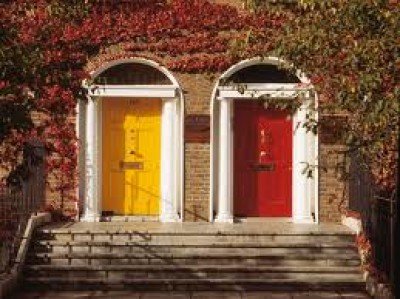
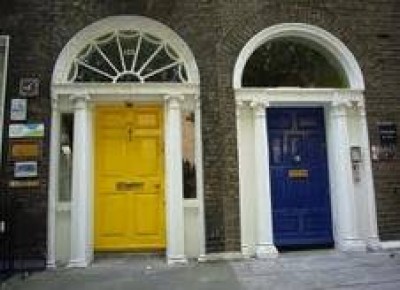
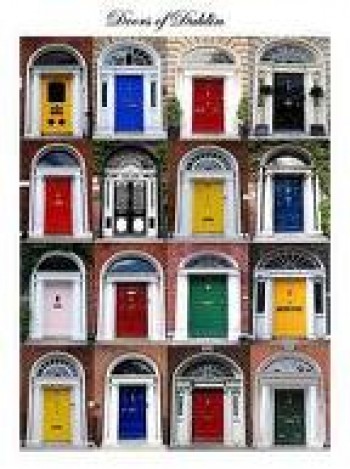
The door to our townhouse needs painting. I would like to do something fun, welcoming and inviting. The doors of Dublin will serve as my inspiration.

Photo Doors of Dublin

Have you ever seen the doors of Dublin? On a visit to Ireland with my daughters a number of years ago we saw them. They are truly amazing. Dozens of, otherwise boring, brick brownstone houses have their front doors painted brilliant, high-gloss colors.

Walking along those streets I saw a story behind each colorful door. Shiny brass hardware, softly lit windows, palladium windows, fresh white trim paint, planters and small front gardens beckoned. Rosemary bushes in planters infused an savory, astringent scent. Giant hydrangeas bloomed in shocking pink and blue. Climbing roses lingered on the brick facade.

The doors serve as a symbol of Irish hospitality which is exceptional. Everywhere we went people opened their homes to us. We experienced Irish hospitality first hand. This included, of course, freshly baked Irish brown bread. It is a quick bread that doesn’t use yeast. But it is warm and delicious, especially topped with local butter.

Painting a door a fun, bright color is inviting, it is welcoming and it is all about hospitality. Like Abraham and Sarah in Genesis 18:1-8, we are wired to connect, to invite, to welcome others in. Our culture is extremely xenophobic – meaning we have great fear of strangers. In fact we even call strangers “aliens” as if they are from another planet!

However, for other cultures and for Christians, it’s about hospitality. For an excellent film about hospitality, I recommend the movie Babette’s Feast. I will share much more about Babette’s Feast in another post.

Afterall, as with Abraham and Sarah, strangers are God in disguise. Mary and Joseph seeking a place to rest. God comes to us in the stranger. In connecting with those who are not like us we become more of who we are meant to be. We develop our personhood. We are not called to be individuals – but persons. God lives in each of us. All is a gift from God. Therefore, what we have is also theirs. Turn it inside out. Invite others in!

Photo Doors of Dublin

You may also like From Dublin to Juarez, Antique Bookstores in Paris and Pura Vida!

Salut! To Your Health!

Photo A. Meshar

Almost every major religious tradition has an understanding of human health, healing or wholeness as a process of becoming focused on others. In Yoga this is understood as the dharma. The dharma is our duty or obligation to live in right relationship with others. This involves caring for others but also standing up for those who are vulnerable.

Judaism, too, has a tradition of right relationship and preferential option for those who are weak and vulnerable. Many times in the Bible God tells the Israelites that in order to be in right relationship with God they must be in right relationship with others. This entails being able to see the world through others’ eyes. This tradition carries over into Christianity as well.

Even Western medicine advocates volunteering or focusing on others as one of the steps in treating depression.

In our extremely individualistic, North American culture many get caught up in a personal, private spirituality. Christians may refer to “my salvation” or “your salvation.” But theologian Anthony Gittins, CSSp had this to say in his scripture reflection for January 2, 2011:

”Charisms are the Holy Spirit’s gift, but they are intended for others, and thus for giving, for sharing. Because they are not just for ourselves, they must not be selfishly hoarded. Paul emphasizes this when addressing the community at Ephesus, but, in a way, it provides a leitmotif for today’s feast and readings. “For us, and for our salvation” is the way we acknowledge the Incarnation: the coming of Jesus, and that means not simply ‘many,’ but ‘all.’

So each of us, recipients of the divine gift, must also be givers. What we have received, we must give and share with others. The privatization of spirituality – the “me and Jesus” mentality – is bogus and unChristian unless it is counterbalanced by a centrifugal missional outreach. Jesus fills us up so that we can be emptied out as he was, for the good of the world. As we become depleted, God replenishes us; as we are filled, so we can be emptied out again.”

“Salvation” (from the Latin word salve) means healing and wholeness. This is holiness. Service and a focus on others are the means by which we enter into the process of salvation and healing in Christianity. It begins in this life, with our consent, and continues beyond our death. Salvation is both Christianity’s promise and its goal: to make us truly human, who we are meant to be. To make us whole.

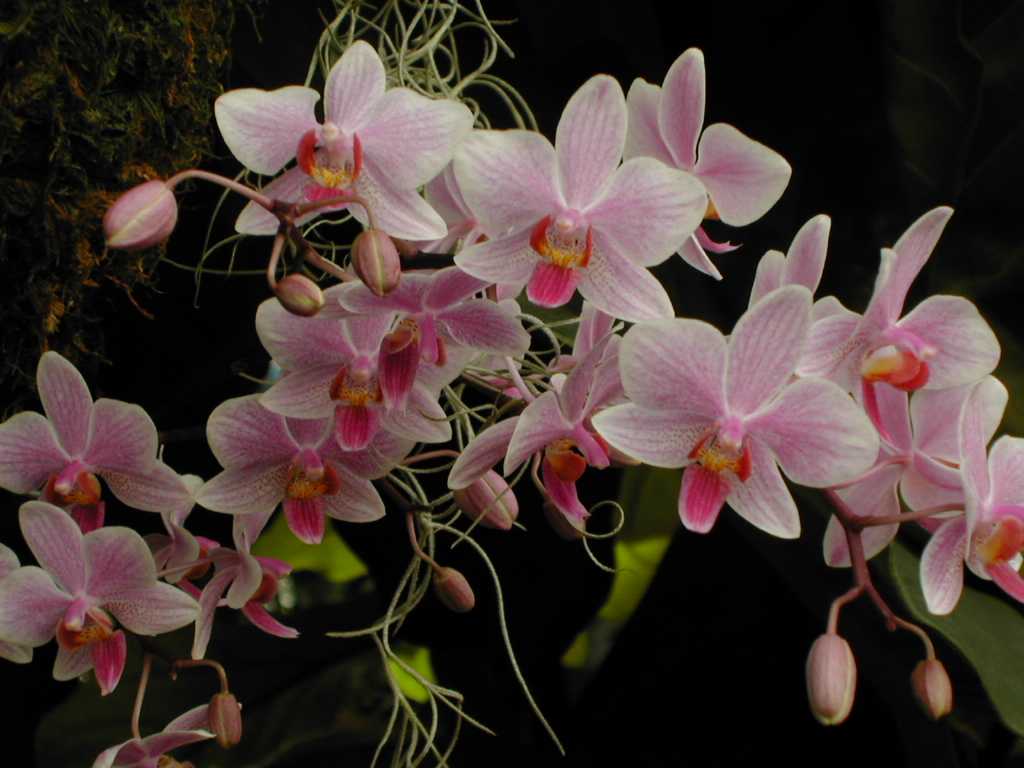
Like the orchids in the photo, unless the entire plant system is healthy, none of the individual flowers will bloom or survive. The health of each flower depends on the health of the whole plant.

As the French say: Salut! To your health!

Roxanne

P.S. Tomorrow a short trip to Paris, then I think we shall go to Dublin (via this blog of course!).