American Catholicism – How’s it Working?

Photo ScholarsAndRogues.com

Jesus described himself as anthropos. This word in the Greek text was originally translated “son of man.” We can better translate it today as “the human one.” The latter is the central truth of Christianity.

If the central truth of Christianity is what it means to be a human person we have to ask ourselves, does the practice of American Catholicism bring us closer to this truth? Christianity, including Catholicism, should foster human persons who have developed their own well-formed interior moral sense. Well formed enough to be able to look beyond their own immediate family, circle or group. Well formed enough to have the compassion to go deeper and want to change the legal, political, social and economic structures that keep people, indeed entire nations, in poverty. Charity alone won’t accomplish this.

Instead, in observing North American Catholic communities, Catholicism seems to foster what governments also hope to accomplish; too many people who look to external authorities for moral guidance instead of forming their own; too many who are compliant with cultural norms – even when those norms or lifestyles create suffering elsewhere in the world.

American Catholicism exhibits an obvious clericalism that promotes poor personal boundaries and the abdication of personal responsibility. Too many practicing American Catholics are committed to attending Mass every Sunday yet resist moving out into the world and learning about the complex nature of poverty. It seems that American Catholics have more concern and interest in sports teams.

Is this all Catholicism can achieve in North America? If this is where we are as an American Catholic community, we wouldn’t score high on any evaluation I can think of.

While part of this can be blamed on a Church that has become inculturated, we need to look critically at church legal and organizational structures that promote external authority and immaturity over adult responsibility. From ordinational leadership with no accountability to the annulment tribunal, we as Catholics have succumbed to church structures that promote the value of external authority rather than take responsibility for the development of our own mature autonomy – primacy of conscience.

Yet we claim to be Catholic Christians. As such, we claim to be called by God to live differently in the world. We claim to be discerning and listening to the Spirit. By definition this means we live by our own well-formed interior authority, God’s authority within us – not exterior authority, not the expectations of our culture or society. Do we?
Ultimate Banana Bread

Photo A. Meshar

In this season of fires in the fireplace and candles on the table, more comfort food comes to mind.

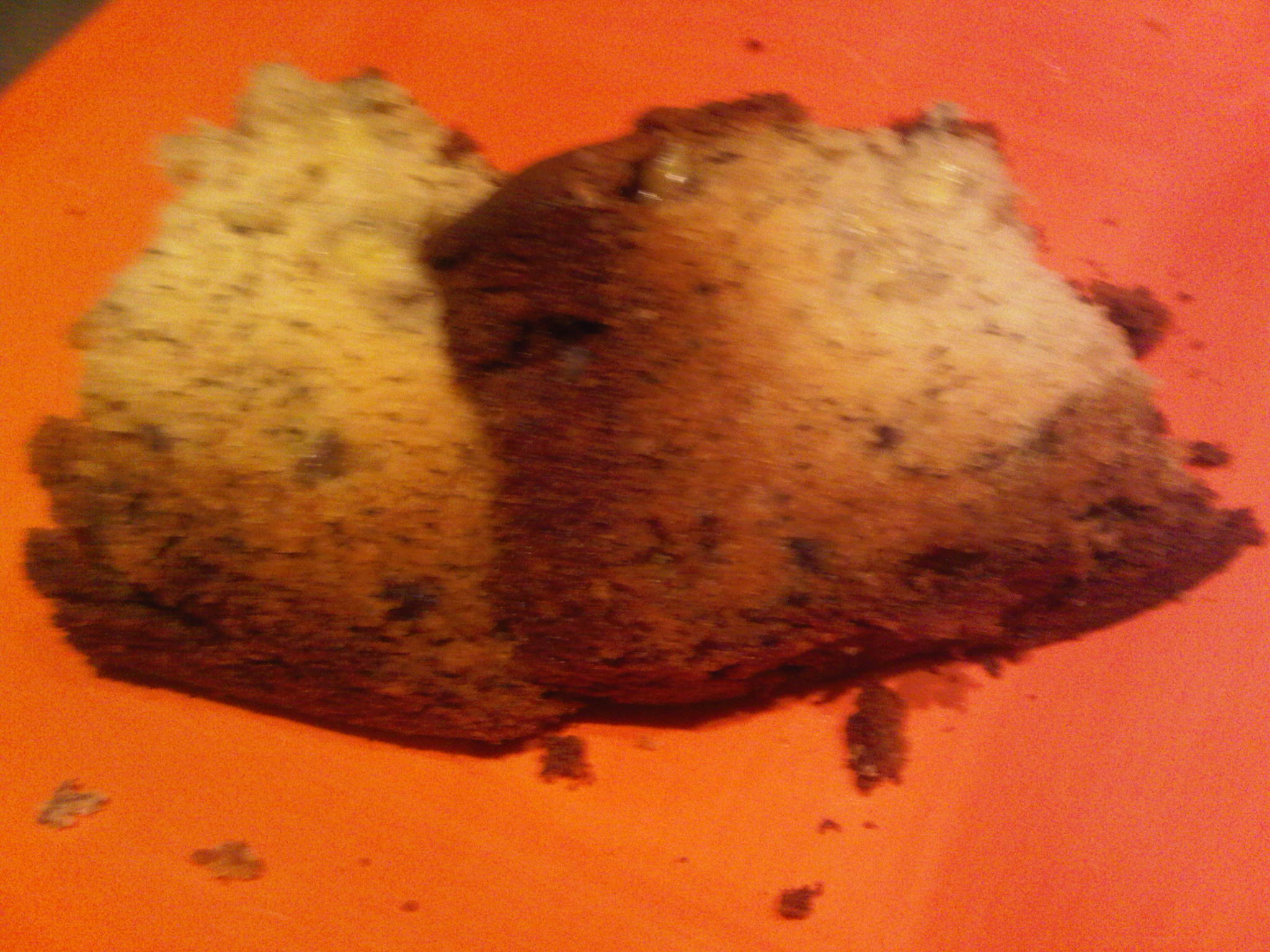
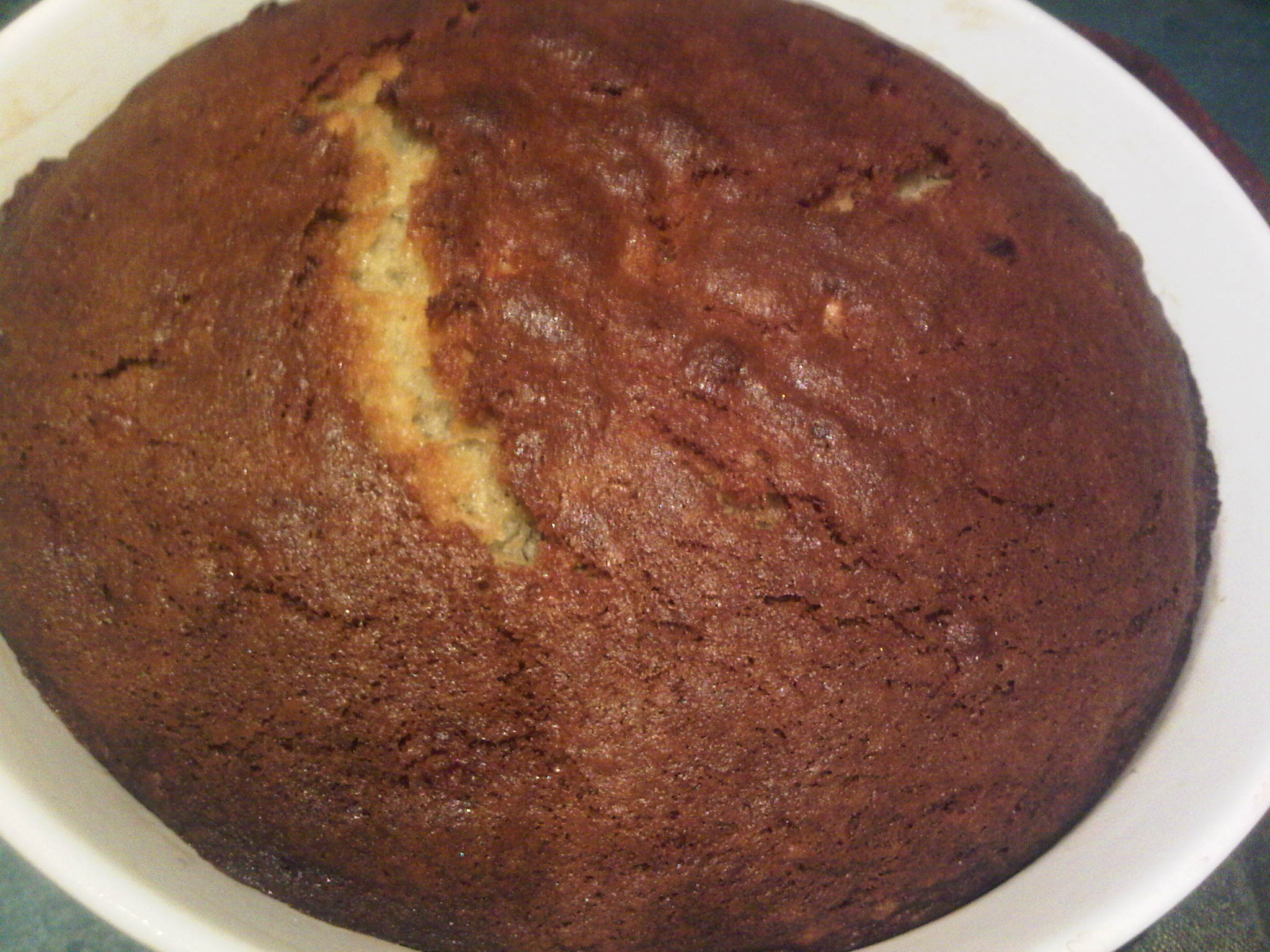
When you are the oldest of seven children you learn to cook early in life. This was a good thing. The first time I made this banana bread I was in the fourth grade. It came out picture perfect. It smelled heavenly. It is best right out of the oven, sliced and slathered with melted butter.

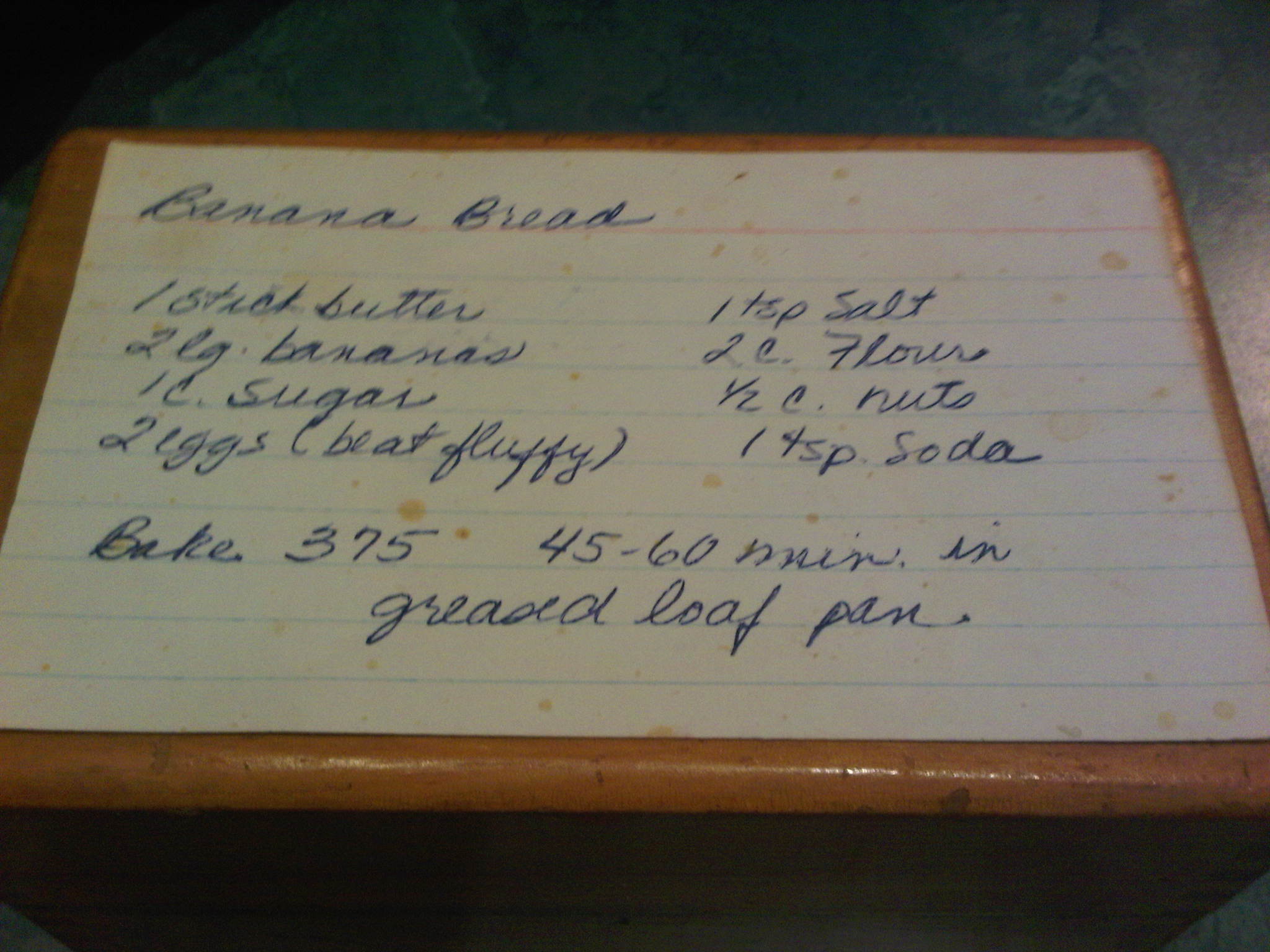
In fourth grade, I wrote down the recipe on a card and I have been using this same recipe card ever since. It still has my fourth grade hand writing on it! Of course the recipe card is now faded, yellowed and splattered with batter droplets.

Photo A. Meshar

My own children enjoyed it, as did guests when served topped with berries and whipped cream, yogurt or vanilla ice cream. I have drizzled it with frosting and sprinkled warmed slices with powdered sugar. I have spread cream cheese between two thin slices and serve it as small sandwiches.

You can exchange the bananas for zuchini or cranberries. Or replace half the sugar with orange juice. This is a no-fail recipe. You can be sure of it because even a fourth grader can do it!

Here is the original recipe:

In a bowl beat 2 eggs ’till fluffy, add 1 stick softened butter, 1 (or reduce to 1/2) cup sugar and 2 large or 3 medium ripe bananas. Slowly add blended dry ingredients: 2 cups flour, 1 tsp salt, 1 tsp baking soda, 1/2 cup nuts (optional). Turn into a greased loaf pan. Bake at 375F for 45-60 minutes.

That’s it. My fourth grade nose can smell it even now . . .

You may also like Spaetzle-German Mac & Cheese, Crispy Potatoes and Winter Comfort Food.

Doll Houses From My Childhood

While I had many toys growing up a few remain clearly in my memory. Perhaps you have some childhood toys that you remember?

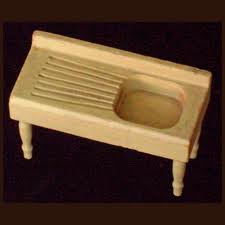
My mother had an antique, cardboard doll house from her own childhood. It came with amazing wood furniture. The kitchen featured a dry sink like the one shown here. There was also an ice box – not a refrigerator. In the bedrooms, small wooden lamps that sat on each side of a wooden vanity with a real mirror. My sister and I enjoyed playing with it for hours.

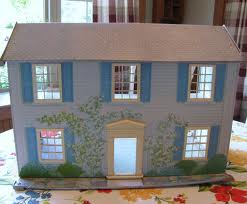
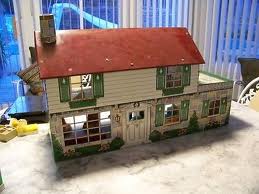
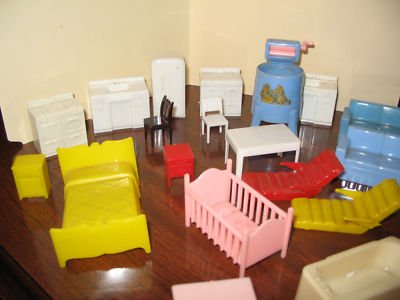
Of course we had our own “modern” doll houses from the sixties. They had more furniture, people and accessories. My doll house was given to me by my childhood friend K. It was metal like the one below, but pink with white trim and the furniture and people were plastic. It even had a baby grand piano for the living room.

There was a crib, playpen and stroller. Plastic yellow stairs attached so you could move the people to the upstairs. Except for the baby – all the family members could stand up on their plastic bases.

My father used to bring home discontinued wallpaper sample books from work. We used the patterns to create our own doll houses from shoes boxes. Stacked on one another they created a doll house with wallpaper, curtains, draperies and even patterned carpets!

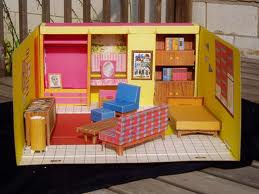
If you grew up when I did perhaps you or one of your friends had a Barbie Townhouse? I had one just like the one in this picture. The furniture was cardboard. There were tiny hangers for the clothes. Two drawers for clothes under the closet. The vanity in the center actually had small curlers, a comb and a hand mirror. The entire house and contents folded up into its own suitcase with a carrying handle. I could take it to friends’ houses. We also had an aqua, plastic Barbie Corvette. These dolls really had the life. But today I wonder, what values were being taught?

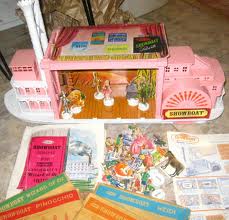
One of the most memorable and more creative toys I ever got was from my Aunt. She gave me a toy showboat theatre. Almost like a doll house, it came with a stage curtain, plays with scenery, characters and dialogue scripts. If I can recall the plays were Pinocchio, Wizard of Oz, Heidi and Cinderella. We used this for hours. I kept it for many years and my own daughters played with it too. Wherever it is today, I hope someone is enjoying it as much as we did.

I think it’s interesting the toys we remember and what they taught us.

You may also like Paper Dolls, Roller Skates & Gum Chains, My Mother’s Sewing Machine, and What Is Your Story?

Our Furniture Moves Around

Our furniture moves around – often. The pieces we have are multi-purpose and we use them for many purposes. Sometimes my desk is in the dining room being used as the dining table. Other times it may be found in the living room working as a desk or in the bedroom functioning as a beside table.

The same can be said of our sofa table, server, bookshelves or the two square tables that are currently serving as a coffee table. Our futon sofa is also a guest bed. Guest linens and down comforter are stored in a zipped quilted bag behind it.

Most of our furniture is lighter weight so I can easily move it without help. Depending on what is happening we may need more room in the living area. I like that we can open our home to women’s spirituality groups, our small Christian community or Mary’s Pence gatherings.

Our living room is small, like those shown in these pictures. It serves as a living room, dining room, guest room, office and meeting space. It must be flexible and open.

Movable, multi-purpose furniture keeps it easy and simply. Most of our furniture is medium toned wood – so it doesn’t show dust. Another way to simplify my life.

Image Southern Living.com

The furniture industry has a real opportunity here.

What about inexpensive, lightweight upholstered chairs on wheels that could be used separately or combined into a love seat, sofa or sectional?

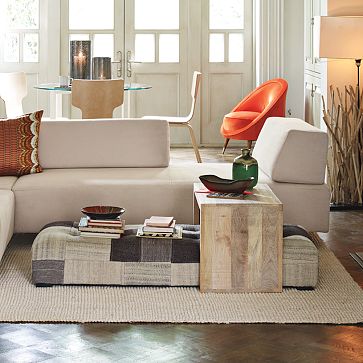
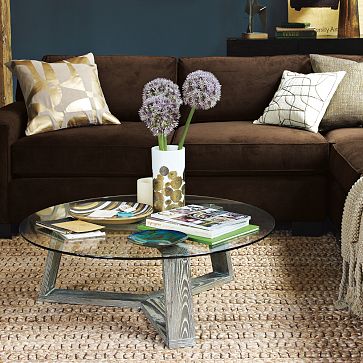
West Elm tries with their Tillary sofa but it is very low to the ground (at only 15 inches high for the base) making it arduous to sit down and get up. Also the back and arm rests don’t stay where you put them – not even in the store – very annoying! Also who wants to bend to the floor for the coffee table in this photo?

Many of West Elm’s coffee tables sit only a foot off the ground. The one below is only 13 inches high -really a foot high? Again, why do I want to bend over that much just to reach something on the coffee table? – and it’s not adjustable. It’s not only West Elm – other makers have the same problems, but West Elm had the promise of adjustable, flexible furniture.

Why not make tables that easily adjust height? Wouldn’t it be great to have a 40-inch diameter, round pedestal table that could be adjusted from coffee table height to chat height to end table height to dining height? Round tables make it easy to add additional seating. There’s always room for one more.

Or how about a 30-inch high dresser on wheels that could be used as a server, buffet, bedroom dresser, TV stand, or sofa table?

What about packaging ready-to-assemble furniture that fits in a vehicle smaller than an SUV or minivan? Why should I have to pay for expensive delivery or rent a small truck?

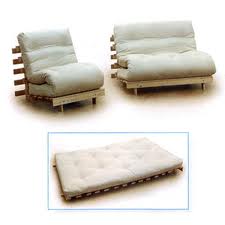
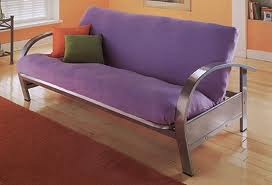
Lastly, when will someone make an attractive, inexpensive, lightweight futon??? You’ve all seen this “lovely number” 🙁  and this 🙁

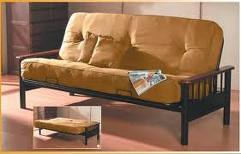
and let’s not overlook this classic (which looks similar to ours, BTW):

Of course there are the Klik Klak versions which look slightly better but feel like cardboard.

The furniture industry is deeply asleep.

You may also like Simplifying Our Kitchen, A Year Without Buying Clothes and why Home Prices Free Fall.


Kowalski’s Grocery Store and Fiji Water

My grocery store is often Kowalski’s. I shop there because they carry Peace Coffee which is always Fair Trade coffee – meaning workers receive a living wage. They also carry local produce that isn’t shipped great distances and supports local farmers.

But tonight while shopping there I was near the deli and noticed a big display of Fiji Water above the Olive Bar display. Really ???? Fiji Water??? Yikes! Do we really need to ship water from the other side of the world??

I took time to convey my shock and dismay to the manager. I explained why I shop at Kowalski’s in the first place (fair trade, local, organic) and why products like this bottled water make me want to RUN and SHOP SOMEWHERE ELSE.

You can do the same. You can make a difference. Take time to talk to the produce manager or store manager. They know, as I do, that just one person making a comment means at least twenty other customers thought the same but didn’t take the time to tell them. If two or more people have negative comments on a product that product is HISTORY! You can make a difference.

Bottled water is bad enough. It gives the impression that it’s OK to pay a high price for water – something every human person needs by virtue of being human. Just like we need clean air, we need clean water to survive.

Although there are rare times when bottled water may be necessary — there is never a time when it is necessary to import bottled water from the other side of the globe! What a waste of oil, plastic (more oil) and money!

Further, too many people living in Fiji do NOT have access to clean water. The American owners of Fiji water have taken over local water sources there (as if you can own the water supply of others’?) and now export what water they have out of the country. Read more here.

(Update 3-3-11 – Learn more about the problems of bottled water in general.

Watch the “Story of Bottled Water.”)

What’s next – making us pay for breathing clean air?

You may also like Life of Water; Water of Life.