What Can You and I Do?

Photo School.discoveryeducation.com

In the previous post I discussed how increased income disparity caused by the power of global multi-nationals is creating a world we do not want to live in.

But what can you and I do? We are not victims, nor are we uninvolved bystanders, we are participants. We are not powerless, we vote with our dollars, time and actions.

I promised you some suggestions. Here are ten for your consideration. If you are already doing some of these – yeah!!! If not, start now!

1. Social change starts inside. We can explore our own values. Know what they are and live in a way that brings integrity to the best within ourselves. Eliminate any violence (physical, mental, emotional, verbal) in your own life. Meditate. Reflect. Pray.

2. Education. We need to become educated regarding the real nature of poverty. Get your news from sources other than American news companies. Read how other countries perceive events in the world. (Jerusalem Post, Al-Masry Al-Youm, Der Spiegel).

3. Read. Read. Read. Most of what we need to know can’t be found on TV. TV is junk food for the mind. Read how U.S. policies have affected other countries. Books like Mark Kramer’s Dispossessed and Jeffrey Sach’s The End of Poverty provide a good foundation and a bibliography of other resources. Request that these books and others be available in your local library. Other books include The Blue Sweater, Three Cups of Tea and Half the Sky.

4. Volunteer and donate to non-profits such as Bread for the World or Mary’s Pence, working with networks of women to solve the problem of poverty – not just provide charity.

5. If your church or community offers mission trips to poverty stricken areas – go. Talk to those struggling with poverty. Listen and learn from them the problems they face every day for clean water, food, housing. We would not last a day in their world. Or arrange a dialogue with some of the working poor in your city through your church or community organization. Find out what life is like for many right in your own community.

6. Buy Fair Trade and local products whenever possible. Buy produce from your local Farmer’s Market. Know where the things you purchase come from and how those who make them are paid.

7. Learn how extreme weather caused by climate change particularly impacts the global south, the two thirds world – creating more poverty. Drive less. Carpool. Walk more. Use public transportation when you can. Consolidate your trips. Fly less often. Shop less. Consume less. Live more simply.

8. Work to end sexism, racism and “isms” of all kinds. Discrimination moves billions of dollars unfairly from one group to another. Begin with suggestions in a previous post here. In the Twin Cities we have an inter-faith discussion group. Join us or start one in your community. Learn about the different (“different” not worse) values and perceptions of other faith traditions. Hear others’ stories and share your own.

9. Become active in local politics. Meet with your local politicians. Participate with many others in “A Day on the Hill”  – a joint religious advocacy gathering today at the State Capital. Or work with MICAH for affordable housing in your community. All change starts locally.

10. What else can we do?

The ability to develop deep relationships beyond our own family (clan, social class, nation) and connect with others who are different than ourselves is what it means to become truly human. This is compassion. This is what brings depth and meaning to life.

We are part of the human family and the web of creation. Just like with our own families – this family will not be healthy and whole until each member is healthy and whole.

This is not an easy task. Certainly it is not an instant or quick-fix task. But neither is it an impossible task. Rather, it takes education, listening, connecting and be willing to make different choices. Come with me on the journey!

You may also like How Extreme Income Inequality Destroys the Economy
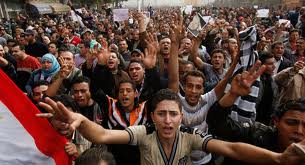
Cry of the Poor

Photo Reuters

Pro-democracy protests, first in Tunisia, then Egypt, Bahrain, Iran and today Libya and Yemen. While these places may seem far away, in our global marketplace they are next door. The cry of the poor is being heard ’round the world. People everywhere are realizing that the corporate and social elites who control the global market place are not interested in making opportunities available to everyone. Rather, they are interested in furthering their own short term interests and hijacking (read “stealing”) the assets of society. I say “short term” because in the long term the effects of this strategy are self defeating. How do corporations do this? By externalizing the costs of doing business, taking bailouts and tax cuts. Social elites do this directly by removing a country’s wealth into private accounts. In either case they are taking resources that don’t belong to them.

The reality is that we are all interdependent and interconnected. None of us will really be well in the world until all of us can be well in the world. The economy exists to serve human beings. It doesn’t exist to support an elite few, nor do human beings exist to serve the economy. We are not “human resources” for the economy. Human beings create the economy and we change it everyday. We have a moral obligation to change it in ways that are strategic and serve the common good – the good of all.

The United States plays a key role in the global economy because most multi-nationals are U.S. corporations. Corporations are not human beings. By definition, they are incapable of having morals or ethics. The purpose of our government is not to represent corporations. Our government is charged with furthering the common good of its citizens.

Unfortunately politicians from both parties are supported by corporate interests. Corporate PACS, not those they serve, fund their campaigns and insure their re-elections. The result of this situation is increasing income disparity as politicians pander to the corporate and social elite. This has already caused the Great Recession with massive bankruptcies, unemployment and under employment.

We have already seen how a large income disparity creates corruption, drugs and murder in our neighbor to the south, Mexico. Is this the kind of world we want to live in? If not, we need to start listening. We need to start hearing the cry of the poor.

What can you and I do? Suggestions to follow . . .

You may also like Farmers Pushed Off Their Land by Investors.

Israeli Breakfast Salad

When visiting Israel, I noticed that people in coffee shops and restaurants were tucking into big bowls of salad for breakfast. Could that be true? Yes! Israelis love salad for breakfast and they grow fabulous vegetables year ’round. So why not?

We try to do the same at our house too. DH cuts up more than a dozen vegies to create a colorful, flavorful salad that we keep in the fridge and use all week long. We use it as salad, to stuff in pitas, toss into soups and sprinkle into omelettes or frittatas. When it’s fresh, crunchy, already chopped and in a clear container on a shelf at “eye height” it’s much easier to remember to use it.

Photo A. Meshar

Here’s a good tip: if you store the salad in a large mixing bowl, place a tiny bowl or sauce dish upside down at the bottom. It will keep any juices away from the vegetables so they stay fresh longer.

Otherwise look for a plastic container with a grid on the bottom, for the same purpose.

Breakfast salad might be served with an egg (fried or boiled) placed on top. Often the salad is topped with a dollup of yogurt, feta cheese or fresh herbs. Pita or toast can be served on the side.

So tomorrow morning, consider a fresh, Israeli salad for breakfast along with your cup of coffee. Your mouth and body will thank you all day long.

Photo A. Meshar

Divine Chocolate, Love and Romance

If you are buying chocolate this Valentine’s Day – look for Divine Chocolate. It’s Fair Trade. All proceeds go directly to the cooperative. It’s delectable.

I took a little time to explore the word love – its history, meanings and etymology. This exploration took me on an interesting journey. Come along with me.

As a noun love can mean “affection” and “friendliness.” As a verb it means “to care” or “to desire.”

Another word with the same meaning was the word “believe,” from the Old English belyfan. Originally “believe” meant “to hold dear,” or “to desire.”

In the late 12th century we find the word “belief” from the Old English geleafa, meaning “hold dear” or “love.” Originally, it was not connected in any way with our modern idea of religion or faith.

Jesus understood this original meaning (Mark 2:5, 5:34, 10:52, 11:22). The word in the original Greek of the New Testament is pistis. Jesus exclaimed that God healed because of the recipients’ own pistis – to have belief in this sense of “to hold dear,” and “to desire.” Pistis can be translated “to have faith” from the Latin root word fidere, meaning “to commit to,” or “to trust.” Jesus was clear that God healed wherever there was trust, desire and commitment – in other words surrender to something larger than oneself.

A theological meaning for the word “faith” as in “faith that Jesus was God” doesn’t attach to the word until the late 14th century.

Lastly I looked up another word often used along with the word “love” – the word “compassion.” Its root meaning is “to suffer with” (Latin, com-pati). This is the ability to see the world through someone else’s eyes; to identify with someone so closely that we suffer with them when they suffer. This requires being open enough to come to know the other person, no matter how different they are, or how much we may think we dislike them.

In the end, our growth comes through our commitment and desire to become compassionate – the ability to suffer with others. To move beyond the Golden Rule of treating others the way we want to be treated – to knowing enough about others to treat them the way they want to be treated.

Photo Think Sicily.com

Now this is romance. This will allow us to fall in love with the world – right where we are, as we are. No chocolate, flowers or date required. This is the ultimate romance that will change the world.

Fall in love with the world and life becomes very romantic. Do what you love with people you enjoy. Then you will be living a fabulous life. If romance with another person crosses your path, well that is just icing on this already many-layered cake!

Treat yourself for Valentine’s Day – Bread and Tulips is a film about falling in love with life – and accepting it as it really is – rather than how we would like it to be. Once we truly accept the reality of our lives we can make real changes to live authentically and with integrity. Ladder of Years by Anne Tyler is a provacative book along the same lines.

A special Valentine’s Day message to my DH – You bring out the best in me. Sharing our life journeys has been an unexpected gift. It is a joy to live with someone who shares my values and passion for social justice. I admire your volunteer work and writing to move the political discourse in our community forward. Your ability to listen and share thoughtfully keep me grounded. You find beauty in unexpected places. Life with you is the best Valentine!

Photo A. Meshar

Tagine To Go

Photo A. Meshar

Tonight we dined on a tagine dish delivered to us by our friend J. I believe her recipe had carrots, squash, caramelized onion, chick peas, raisins, clove, turmeric, cinnamon and preserved lemons. I added the rice and slice roasted chicken breast. The flavors are intense, rich, sublime – and delivered! What more can you ask? I am delighted that she made extra and took time to get it to us.

Tagine is an ancient Moroccan way of cooking using a clay pot. Placed in the oven with the food in the dish that forms the base, vegetables and meat come out tender, caramelized and very fragrant.

She also gave us a beautiful jar of preserved lemon (and recipes) during the holidays. I’m looking forward to making a tagine dish myself. Thanks J.!