Yoga, Sexuality and Integrity

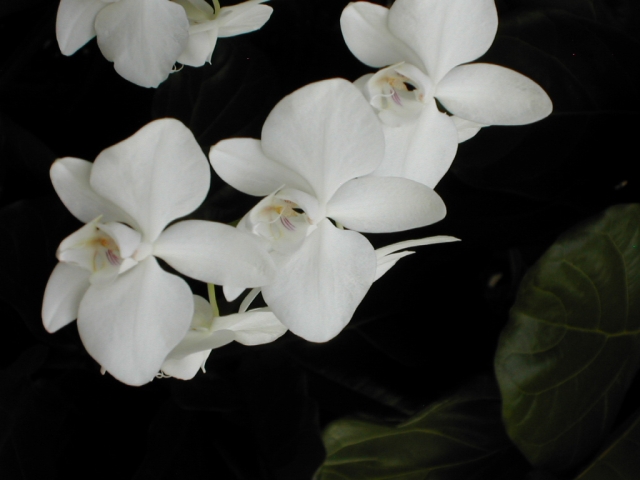
Photo A. Meshar

My Yoga study continues to reveal some underlying similarities between Christianity and Yoga. Which isn’t surprising since neither tradition emerged in a vacuum. They influenced and impacted each other over thousands of years.

Traditionally, in the Eight-limbed Path of Ashtanga or Raja (Royal) Yoga there are five yamas or abstentions and five niyamas or observances. These could be understood as life directives like the Ten Commandments. One of the yamas or abstentions is brahmacharya. The word brahmacharya is made up of two words: Brahma, the absolute, eternal, supreme God-head and charya, which means “to follow” meaning follow a “virtuous” way of life.

In the tradition of Yoga, brahmacharya refers to sexual abstinence or celibacy. Like the monastic traditions of Christianity, celibacy is practiced as a way of harnessing energy from the relationships of one’s sexual life and diverting it toward deepening one’s spiritual life. In the Yoga this was traditionally taught and practiced only with regard to men.

However, if we understand sexuality as a part of our wholeness as human persons we can begin to interpret this yama of brahmacharya more expansively. If God is present within each person, then gnostic dualism (anti-body or spirit is better) is death-dealing. God within each of us means that God hears what we hear, feels what we feel and suffers what we suffer. We meet God in and through our bodies, including our sexuality. God experiences the world through our bodies. To know this is to value ourselves and our relationships with others. It is to be honest and truthful about the role sexuality plays in our lives.

The same energy that brings sexuality enlivens our spiritual life as well. Learning to become open and intimate with another also prepares us for opening ourselves to life, reality or God. Using our sexual desires in a way that is life-giving for us and for others honors our value as persons. This means that we must be willing to take the time and care required to go more deeply into a relationship with someone else. This takes effort, time and commitment. It takes monogamy. It is impossible to have the time or energy to maintain deep, committed, thus honest sexual relationships with more than one person at a time.

It also requires developing good boundaries. We develop enough self-understanding to know our own values and choose actions that respect those values. We have the ability to consistently choose those actions and responses that will keep us in a calm and abiding place. We learn to do this within the context of our own sexual relationships and within other relationships too. Simultaneously we respect others’ boundaries.

Brahmacharya in my own life means honoring my own sexuality. For me, this means choosing to be in a marriage because the relationship is life-giving and brings out the best of who I am. Earlier in my life I understood the vow of marriage (“until death do us part”) to mean staying in a marriage no matter what – even if it was abusive or soul-killing. I thought that breaking the vow meant breaking with one’s personal integrity. But gradually, I came to see that this vow is made by two parties and therefore must be honored by both parties. One person can’t honor the vow alone. When the other party is no longer committed to the vow, or was never committed, then the contract is broken.

Regardless, to remain in sexual relationships that hurt, abuse or cause sadness is to dishonor not only ourselves but others as well. This is a profound distortion of what sexuality is meant to be in our lives. We are all interconnected. Brahmacharya dictates that we seek sexuality in relationships that leave us feeling loved, valued and cared for.

You may also like Spring Cleaning – Saucha, Yoga Wisdom, Do You Need a High Approval Rating? and Salut! To Your Health!.

Where Do Our Clothes Come From?

Photo BenefitsOfYogaNow.com

This article from Everything Yoga Blog asks where our yoga clothes come from. It was a good article as far as it went. Knowing the country of origin is important. But the author should have gone further. It’s not enough to know where our clothes come from. Singapore, China, India — it doesn’t really matter. What does matter is this – were the people who made these clothes paid a fair and living wage? Were they provided with good working conditions? Were they adults or children forced to work instead of going to school? Of course, we should also ask, what is the environmental impact of the clothes we buy? These are the questions we should be asking.

Truthfully, we should be asking these questions for everything we buy. We have a moral responsibility to ask these questions and require that answers be provided in order to make a decision to purchase. Once we know, we have a moral responsibility to purchase accordingly.

Watch this movie about the U.S. apparel industry, Made in L.A. to learn how three young women changed the industry. Be inspired!

We vote for a just world with every dollar we spend.

Follow-up article – this article details the toxic and banned chemicals showing up in clothes made by major clothing manufacturers. Because they are manufactured and shipped from overseas, the clothes arrive with the toxic chemicals already on them. They leach into our environment and onto our bodies when we wear and wash them.

“Samples of clothing from top brands including Adidas, Uniqlo, Calvin Klein, H&M, Abercrombie & Fitch, Lacoste, Converse and Ralph Lauren were found to be tainted with the chemicals, known as nonylphenol ethoxylates, the watchdog said at the launch of its report “Dirty Laundry 2”.

You may also like Kowalski’s Grocery Store and Fiji Water, Element a Green Hotel in Dallas Snow-Over and From Dublin to Juarez.

Romantic Bathroom Before & After

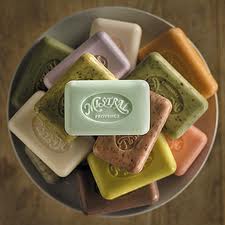
Photo Mistral Soap

You may already know that my word for the year is romance. I’ve been watching for romance in my life, in the lives of others and in the world in general. Life or reality seeks to connect with us. There is a depth to reality that wants to reveal itself to us. Life continually tries to romance us. We can do the same. When we bring more romance into the world we bring depth to our lives, joy to others and more enjoyment to our own existence.

There are many ways to bring romance to life. But one of the easiest is to simply add a little romance to your surroundings. I have already done this in our bedroom and dining area. Now why not a room we use everyday – the bathroom? It makes life a tiny bit more luxurious. This is our ONLY bathroom, so any changes have a big impact. Just like the re-dos of the other rooms, I decided to use mainly what we already had elsewhere in our townhouse. This is not about replacing the perfectly good cabinet, sink top, lights, tile flooring or tub surround, even though I might want to. 😉

This room hadn’t seen any decorating attention for at least seven years. A more luxurious look was in order. I opted for a higher contrast ivory/cocoa/tangerine color combination. Our bathroom is adjacent to the bedroom so I wanted to use colors that wouldn’t conflict with the bedroom. These same colors are already present in the bedroom, but with less intensity. Another plus was that my existing bath towels (ivory and various turqoise shades) which are nice & soft and in good condition would still look good with the new color scheme. Afterall, I didn’t want to purchase all new towels.

As you know, luxury is a matter of choices – not of money. The glass vase with tropical flowers and a small print were moved from elsewhere in the house. French soaps and incense were placed in a bowl. The only new items were the satin finish paint ($16.99 on sale at Sears), the ivory jacquard shower curtain ($10 TJ Max) and the ivory cotton loop rug ($9 IKEA).

Post Script 3-22-11: Over the years, I’ve always used Sears Easy Living paint in every home I’ve had. It covers almost always in one coat. It’s durable, scrubable, inexpensive and doesn’t fade. They custom mix to match anything AND hurray – it’s also very low VOC at 32g/liter, well below Consumer Report’s limit of 50 for a low VOC designation.

Here’s the ho hum before –

Here’s the more romantic and inviting after –

Photo R. Meshar

What do you think? Candles, French soap and a long, hot soak – here we come.

You may also like Romantic Bedroom Before & After and Romantic Dining Area Before & After.

.

Irish Heritage

Top o’ the mornin’ to those of Irish heritage as well as everyone who celebrates with them.

Depending on how the day goes we may celebrate by cooking up a little corned beef and cabbage along with some Irish soda bread. We’ll see . . .

My heritage includes both Irish and German cultures. As the joke goes, “It’s good to be Irish and German, as long as you get your sense of humor from the Irish and your work ethic from the Germans – and not the other way around.”

This joke is funny because it alludes to the dark side of being Irish. Too many Irish families struggle with alcoholism and addiction. These families will often describe themselves as “close knit” which in reality means exclusionary. Caught in this clan from birth, family members can’t see the devastation brought about by binge drinking at family functions over decades. They can’t see the pathology of having a social life that never extends beyond family members.

While many families exhibit some dysfunction, these families exhibit a dysfunction that is toxic and extreme. There are identifying behavioral markers. In toxic families (not only Irish, but others too unfortunately), the family becomes the only social network. Family connections are self-contained, limiting and dysfunctional. I’ve observed family members who even idolize older members who exhibited addictive behavior, participated in tax evasion, fraud, abusive behavior, even pedophilia!

Other related characteristics among family members include symptoms of anxiety, depression, eating disorders of all kinds, migraines and other stress related disorders.

Outsiders need not apply  – another marker. I remember hearing statements like “I only allow family to babysit my children” as if other people are incapable of taking proper care of children or are never trustworthy. What fearful values regarding relationships with others are being taught here? Further, this results in the children having even less contact with others beyond the family. Over decades, I remember only a handful of outsiders ever attending most family functions. This is social “incest” at its worst.

Individual autonomy is feared. Those in the family who move into the wider community or develop autonomy may be shunned – however considering the poor relationships that are being ended, that’s not necessarily a bad thing. I speak from personal experience. I was lucky. I escaped.

Members of toxic families rarely contribute to the wider community. They don’t have the social connections to do so. Even it they try – generally their personal boundaries are so poor that others will limit contact with them. In toxic families, everyone is way into everyone else’s business. Communication is not transparent – but secretive. Sarcasm and double meanings are rampant. Family secrets abound.

At its core, all of this behavior comes from living out of a stance of fear. Members fear that they could never survive outside the “family” as unfamily-like as it is. The paradox is that their acceptance within in the group is not unconditional or loving – but highly conditional as demonstrated by those who are shunned.

While the inclination to alcoholism (and other addictions) is genetic, it is also an attempt to avoid the underlying pain and suffering from the extreme dysfunction. Sadly, too many families that socialize around binge drinking exhibit many of the above markers and characteristics.

Our families are meant to be places where we learn about inclusion and acceptance. In healthy families we learn how to develop loving relationships so that as adults we can move out into the world and create similar relationships with those who are not part of our families of origin. In my own life, because I was forced to leave home as a minor, I was fortunate to have close contact with many other healthy families throughout my life, who demonstrated for me what a loving, healthy family dynamic was.

This St. Patrick’s Day, may those who are caught in a family web of toxic dysfunction experience a desire to take the first step toward change.

To all of you whose life work is to help create healthy family systems I say “go raibh maith agat” or thank you.

You may also like Estrangement – The High Cost of Leaving or Living? and Celebration of Family.

Sand Fantasy Retreat

Israeli artist Ilana Yahav does amazing art visuals with music, sand and her own hands and imagination. Click below. You can link to her site here and click on different YouTube videos. (Double click to view a larger screen.)

In this time of Lent, sit back and enjoy a 5 minute retreat on line. . .

You may also like The Story of the Wolf and Lent – Into the Desert.