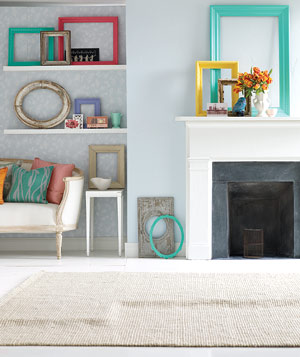
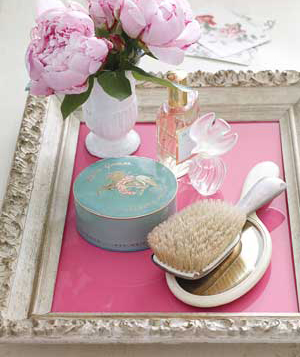
No, this isn’t a post on picture frames. This is a post on the way we frame, view or understand the world. Frames are powerful. Once we are in a frame it is almost impossible to see our way out.
However, sometimes something happens that will snap us right out of our frame. Language can help us reframe. Read this post by DH to learn how the language we use determines how we understand or frame crucial issues.
An accident, a trauma, a comment or even a story can quickly pull us out of our frame.
Jesus told stories, called parables, to shock people out of their frames. Jesus was adept at the Judaic tradition of parables. An example of this is the story of the Good Samaritan (Luke 10:30-37).
Jesus tells this story in response to the question, “Who is my neighbor?” In this story, both the priest and the Levite – upstanding people in this social “frame” – refused to help the traveler who had been robbed and left on the roadside. Yet, the Samaritan not only helps but takes the traveler to an inn and pays for his care until his return. This is a shocking story because Samaritans were considered unclean and undesirable people. In our day perhaps the Samaritan might be a homeless person. In the shock of the story, Jesus re-frames the question. Ask not, “Who is my neighbor?” Rather, ask “What must I do to be neighborly?”
All of Jesus’ parables were meant to shock us in this manner, to jolt us out of our distorted view of reality. Jesus used the word metanoia, a Greek word meaning change your mind, change your view of reality. It was directly translated as “repent” but the modern meaning of this word misses what Jesus was communicating. It wasn’t about stopping a particular action or behavior. It was about changing one’s entire orientation to life.
We have other examples of reframing. Aesop’s Fables served a similar purpose.
In ancient Greece, Plato’s Allegory of the Cave is probably the most famous frame-breaker. In this story people, chained to a wall, labor deep in a cave. Their world is very small. All they can see are shadows on the wall before them. They can’t even turn around to see the fire behind them that causes the shadows.
One day, one of them escapes. In leaving the cave she sees the fire that casts dim light into the cave and creates the shadows. Climbing further out of the cave she sees more light reflected from a pool of water. Moving higher still, she finally sees daylight far above at the mouth of the cave.
She returns to tell the others. But they don’t believe her. They won’t even try to turn around and see the fire, much less move towards the light reflected in the pool.
In the end, she must climb upward into the daylight and leave the cave behind.
The cave is a metaphor for being trapped in cultural or family systems, or perhaps being trapped in a life story that is limiting or a narrow worldview. It results in a lack of real freedom to choose better possibilities.
Life is full of possibilities. Full of light. Do we want to live in the shadows? Or in the light? Re-frame.
It was a dark and stormy Sunday night… We really hadn’t planned anything for dinner. Maybe fish & chips? Not really sure, I went to the grocery store. Strolling into the frozen food aisle, where I haven’t really shopped in some time, I couldn’t find anything that wasn’t loaded with cheese, salt or fat. Worse, no fish & chip options unless I wanted fish sticks with an entire meal (think Lean Cuisine, ugh!). Then, I saw it – a bag of frozen gnocchi. Suddenly any other ideas about dinner went out the window.
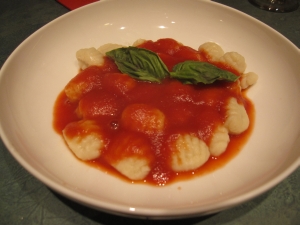
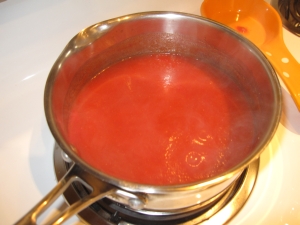
Gnocchi is fabulous, succulent, rich and wonderful. (Post Script: gnocchi is potato based for those who avoid wheat.) Even better, this gnocchi was made by the Pasta Works Restaurant nearby in Chisholm, Minnesota – a local business. Now all I needed was a can of tomato puree and some fresh basil for a fabulous meal.
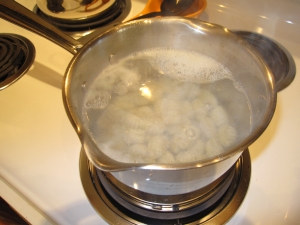
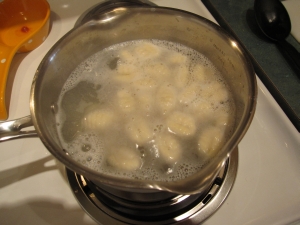
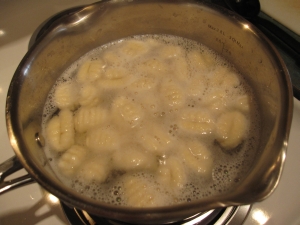
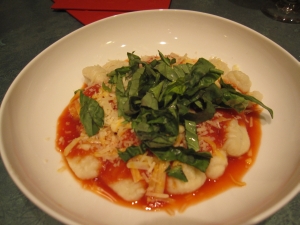
You can try making gnocchi from scratch, but we’ve never had good luck with that. On the other hand, frozen gnocchi is inexpensive (around $3 for 8 side servings) and really easy to make. Boil water in a pot. Put in half a bag of the frozen gnocchi. Wait 5 minutes until they float to the top. Drain and you have two main servings. Top with the heated tomato sauce and thinly sliced fresh basil, a little pecorino or shredded Parmesan and Mmmm. It may never make it to the table.
Another option: with basil plentiful at farmers’ markets right now, try it with fresh pesto sauce – also delicious!
A very good friend of mine refers to the idea of taking a deeper dive. I am hoping to continue a deeper dive into my life. Sort of a sabbatical to stop and reflect on what my life should focus on going forward.
This entails, reflection and listening or prayer – a dangerous activity. A little like high-diving because it feels like free-falling, you never know where you may end up.
My hope is to examine what I’ve learned over the past few years, explore new areas of interest and meet new people along the way.
Education is so important. Questioning is the foundation of education – and education is the basis of our formation, growth and personal development for Catholics. This is why there are Catholic universities, hospitals and centers of learning.
Questioning is the only way we begin to clearly see systemic injustice. Until we see it we can’t work to change it.
To be Catholic is to question everything.
“What gets us into trouble is not what we don’t know. It’s what we know for sure that just ain’t so.” – Mark Twain.
You may remember that in adding romance to my life this year I decided to add some to our living space. I started with the bedroom and bathroom. The dining area followed. Now the living room.
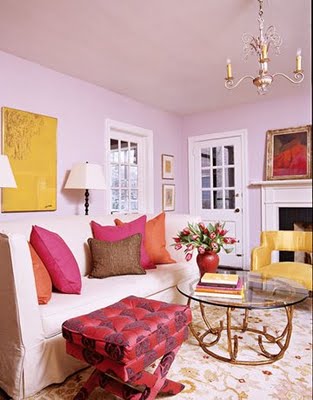
You can see the inspiration ideas from a previous post here. Below is an inspiration picture that I liked for its energy, lightness and fun colors.
Photo Angie Hranowsky
Our space needed to lighten up. I wanted joyful color with plenty of white and a summery feel. My desire was to add more layers, with space for books, candles, plants and space to entertain. The futon would remain, as it serves double-duty as a guest bed. Plus the space needed to be compatible with adjoining dining area and kitchen spaces since those are being re-done as well.
Whatever was done would need to flow with the rest of the townhouse. Colors shouldn’t be jarring with the bedroom and bathroom. And of course it shouldn’t cost much. I prefer to donate money rather than spend it on decorating. But economics shouldn’t prohibit creating a beautiful space with light, energy, warmth, casual feel and hospitality. At least it’s never stopped me in the past. 😉
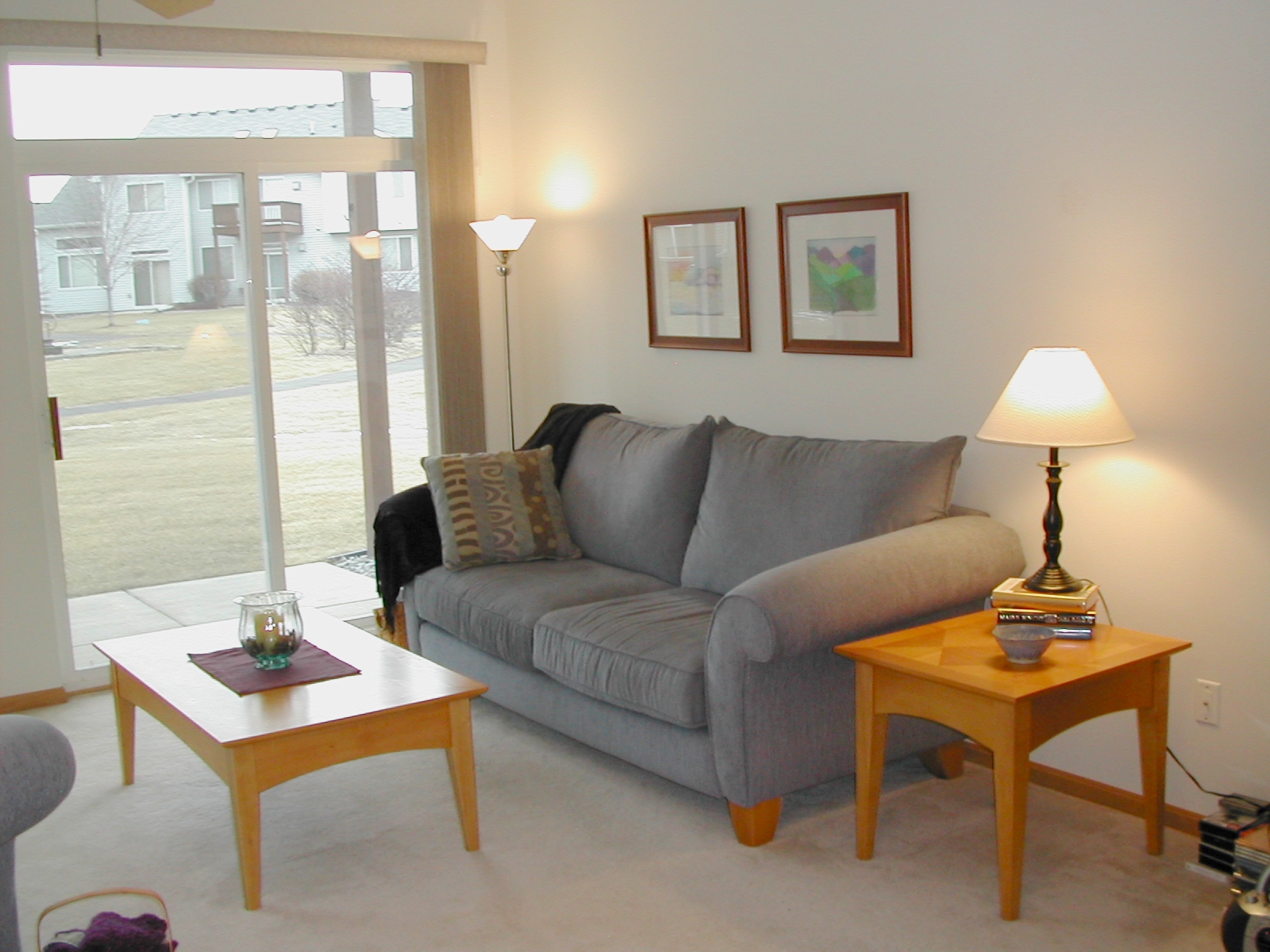
I forgot to take a before picture – but previous colors were red, gold, sage, white with light teal. A sage blanket was on the sofa. A brown runner anchored the sofa and coffee tables. It was OK, but some new energy was needed.
Here’s a picture from three years ago so you can get an idea of the space.
I removed pillows and other accessories. The sofa, now a futon, has since moved to the opposite wall. The coffee table was given to a friend and the two end tables serve as coffee tables. Last summer, book cases from the small bedroom were moved to the wall opposite the sofa (not seen in this photo).
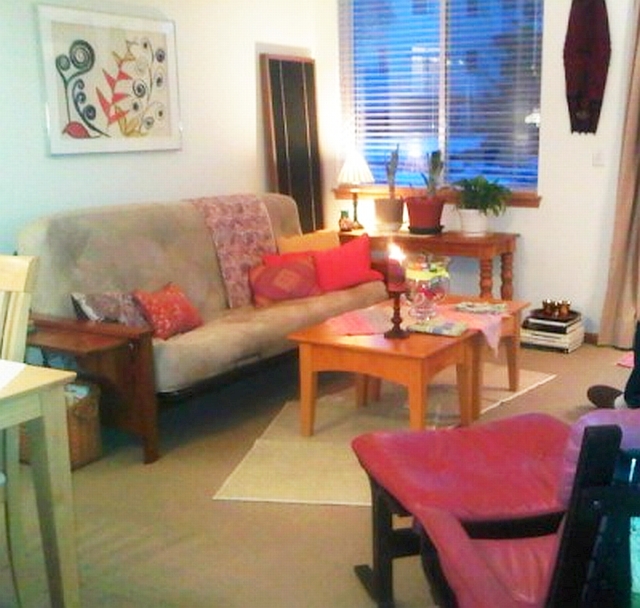
Searching my linen closet, I found the rag rug for the table and an Indian cotton throw for the sofa in similar colors. A new candle and some fun toys (jacks, Silly Putty, Playdough et. al.) in the glass hurricane on the coffee table are just for fun. Next, new cotton rugs were layered under the tables. I purchased four new colorful pillows and pulled one from a bedroom. We found the rose-colored chair and ottoman on Craigslist.
Now the space is totally changed. Before, the artwork seemed to compete with the room. Now the artwork sets the color and tone, supported by the entire room. Candle light adds to the warm, romantic look.
Here’s the more romantic after.
Photo R. Meshar
Now it’s light, bright, relaxed. We enjoyed dinner in here tonight. Easy and comfortable . . .