Recently Diane Ackerman wrote an article for the New York Times entitled, “The Brain on Love.” Basically it notes that when individuals are in loving and stable relationships they tend to feel safe, secure, content and even blissful. Feeling loved, safe and secure allows us then, to engage the world and others in healthy and productive ways.
But what about people who have experienced a series of unhealthy realtionships? Maybe, even since childhood? The good news is that our brains are endlessly adaptive and we can rewire or change our neural pathways at any time. People may work do this, for example, when they enter therapy – as the article notes.
What the article doesn’t state – is that we don’t actually need to be in an intimate or married relationship with another person. We can meditate, enter long periods of silence and connect with that unconditional loving part of ourselves that exists deep within our own hearts.
The universe is holy and that holiness exists within us too. We carry it with us. Sometimes unhealthy relationships, work, addictions or busyness simply distract us from connecting with the love and beauty we carry inside ourselves.
This is why meditation, prayer (another word for meditation) and silence offer such an important place of healing. We can heal our distorted ways of viewing ourselves, relationships and reality around us.
Our brain seeks healthy love and compassion to heal itself – which paradoxically – exists within our brain. Meditate, use healthy self talk. Rewire your brain pathways – a little bit each day.
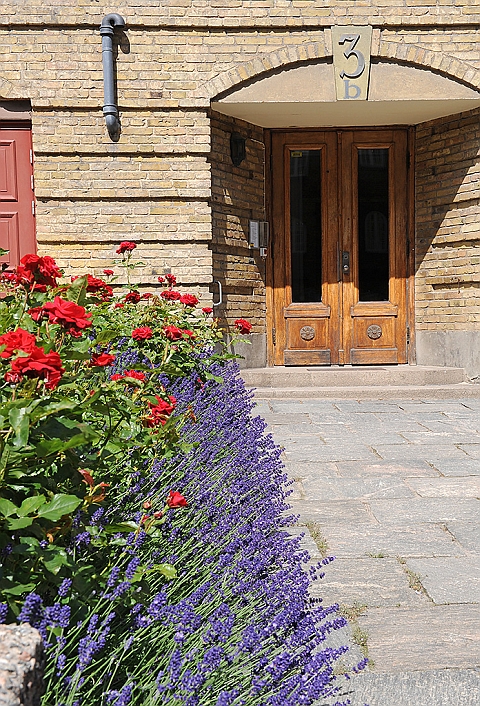
In the rhythm of our lives a door may close – we experience this with disappointment. However, other doors are always opening. We may resist walking through an open door because it means change, we don’t know what is on the other side, or we simple don’t always see it as an open door.
We are always presented with new doors. What doors will you see in your life today? Are you watching for them?
Passover blessings to everyone celebrating this special meal today.
What dangers have passed over you in your life?
Reflecting, I pray that all the crazinesses, greed and seductions of our dominant culture (like the dominant culture of ancient Egypt) will pass over the door of my soul. Through Passover, the ancient Israelites made an exodus into a new life. I have made an exodus into a new life too.
Embarking on an exodus means leaving many things behind – material things and unhealthy relationships too. Often one must leave in haste, just as the Israelites did, packing lightly for travel in the desert.
In the desert the known landmarks of life are gone. New ways of living must be discovered. Things are uncertain from day to day.
But we don’t take the journey alone. I didn’t and couldn’t have done it on my own. Walking through the desert is difficult, scary and comes with no guarantees. It requires trust – another word for faith. God, through other people, walked with me to envision and create a wonderful new life. It wasn’t a life that I could ever have envisioned for myself. But fortunately others could envision it for me – even when I couldn’t see it.
Now, in gratefulness, I do what I can to educate myself and work to end systems of death or injustice, so that others can experience passover – living into a better life too.
Occasionally I encounter a Catholic with the strange idea that Church teaching never changes. Any amount of reflection on this faulty assumption should immediately bring to mind numerous changes that have occurred over time. Another strange idea that some Catholics have is that culture shouldn’t influence Church teaching. Both of these ideas can be easily examined and questioned.
If we look at the book of Acts of the Apostles, we see an early Church that taught the practice of pooling and sharing material wealth (Acts 4:32-35) and caring for everyone within the community. This was the teaching and practice of early Christianity. Certainly that practice has changed.
Of course the practice of Eucharist has changed dramatically. St. Paul reminds the Corinthians that the practice of Eucharist is to be a meal that serves and feeds the poor who are actually hungry (1 Cor 11:17-22). Now there’s a foundational teaching that changed! When was the last time you went to a Catholic mass where the ritual included serving an actual meal to those physically hungry in their midst? Perhaps never. Nevertheless, such masses do occur and I have attended a few.
Other teachings have changed as well, and thankfully for the better. In the middle Ages the Church declared that the practice of slavery was a doctrine and usury was a mortal sin. Both teachings have since been shelved and in fact, reversed.
Now, what about the influence of culture? In truth, the cultures of the day have always influenced Church teaching. First Jewish culture, then Greek, Latin, European nomadic tribes, etc. How could they not? Culture (including language) is the lens through which people view their world.
Cultural influences can be positive. Consider the St. Paul’s Jewish idea that we are all part of the Body of Christ. On the other hand consider the negative Roman idea that governance is best done via a monarchy or imperial oligarchy. Today a negative influence would be unregulated capitalism in our culture. But a positive one could be the concept of democracy or everyone having a voice.
Church teaching is always changing. It is alive. We add to what we understand, how we interpret scripture and dogma (core truths) and continue to build on that understanding with each culture that becomes part of Christianity. Over time our understanding of what is holy, whole and healing changes. Our understanding of what it means to be truly human changes. Our understanding of God changes.
With the idea of “mission” therefore, “we do not seek to Christianize Africa. Rather we seek to Africanize Christianity.” We do this by listening and lifting up the ways God is already at work in African peoples and their cultures.
But how will we know which influences are positive or negative? A good way to check is to ask yourself, “Does it benefit the good of all or the common good?” and “Does it have a preference for the vulnerable and weakest among us?”
Not everything in our Catholic traditions should be kept. We need to know, as Catholics, what to appropriate out of our Catholic Christian traditions – and what is best forgotten.
Do you go walking? I try and walk at least once a day. Best, of course, is 10 minutes, three times a day. Where I live in Minnesota there are many paths, lakes and rivers. As it happens I live along the Minnesota River, a great place to walk.
There is a secret lake near our house. We walk there often. It looks different every time – always changing.